A buyer with a strong pre-approval letter and a healthy down payment walks into the Manhattan Beach market feeling ready. They've seen the citywide median, they know the school district is Mira Costa, and they assume the fiercest competition waits on the bluff or along the Strand, where the money is thickest. Then they lose their first three offers on a three-bedroom off Elm or Oak, not to a hedge fund manager buying a trophy view lot, but to a family from four blocks over who just sold their old place and is closing without a lender in sight.
That's the part of Manhattan Beach the median price never tells you. The number that actually decides whether you win a house here isn't the city's overall sale price. It's which of the four sections you're competing in, and how many of the other bidders in that section don't need your bank at all.
Four Micro-Markets Wearing One Zip Code
Manhattan Beach covers a little over three square miles, but real estate here has always split into four distinct areas, each with its own lot sizes, architecture, and buyer profile.
- The Sand Section runs along the coastline between the Strand and Highland Avenue, roughly from Rosecrans down to 1st Street. Lots are narrow, often just 30 to 35 feet wide, which is why so many homes here go vertical, three stories with rooftop decks chasing a sliver of ocean. This is also where you find the walk streets, the pedestrian-only blocks that carry a real premium, and El Porto, the surf break at the north end where locals still show up for dawn patrol before work.
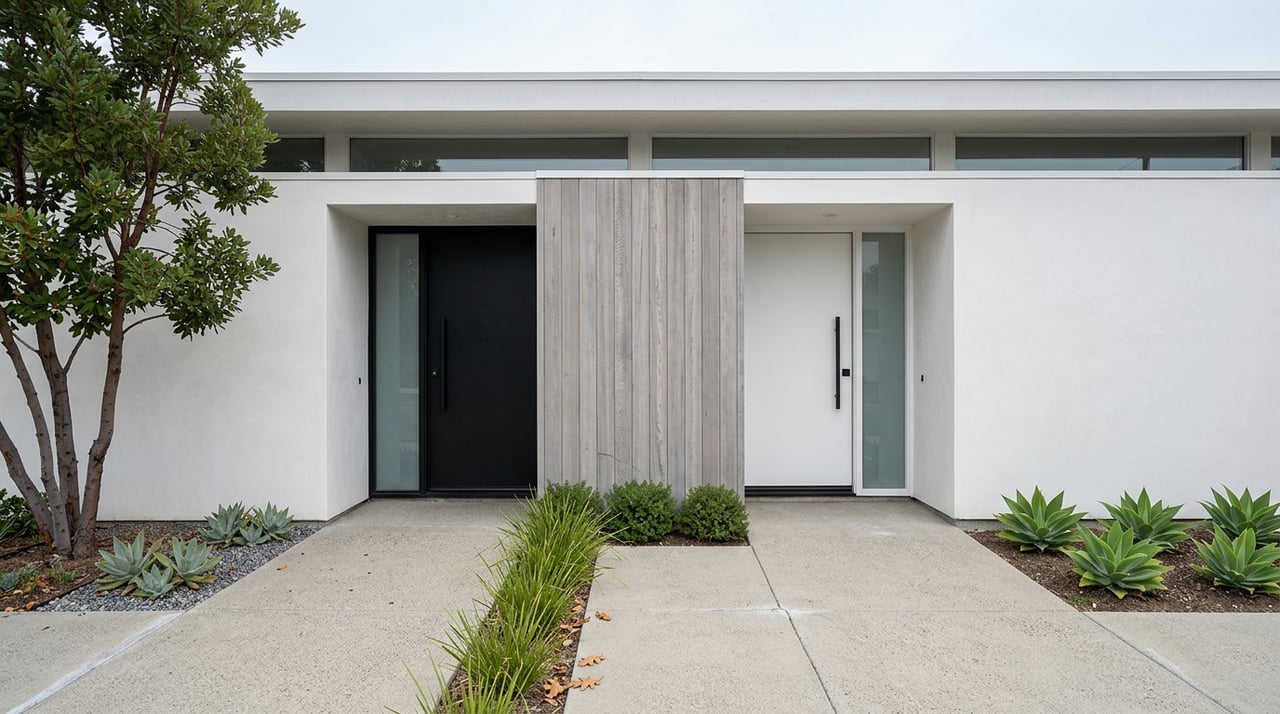
- The Tree Section, east of Sepulveda, is the city's largest residential area and its most recognizable by name alone. Streets here are named after trees, Elm, Oak, Poinsettia, Maple, and lots typically run in the 4,500 to 7,500 square foot range, wide enough for an actual backyard. The Greenbelt, a 21-acre park with a mile and a half of walking trail, cuts through the middle of the section and functions as its shared front yard.
- The Hill Section, perched between Highland Avenue and Sepulveda, is the smallest of the four but carries some of the largest lots and highest per-home prices in the city. Homes here average roughly 25 percent bigger than a typical Tree Section build, some topping 7,000 square feet, and the elevation buys ocean and Catalina views that no other section can offer at the same frequency. Even a small park like Larsson Parkette, tucked near 2nd and Larsson, feels more private up here than its size would suggest.
- East Manhattan Beach, everything east of Sepulveda outside the Tree Section proper, includes Liberty Village and the gated Manhattan Village community, and holds the city's biggest park, Polliwog Park. It remains the most accessible entry point into Manhattan Beach ownership, though even here, spring 2026 agent guides put single-family pricing in the $1.8 million to $2.8 million range, hardly a bargain by any measure outside this zip code.
Ask for a single comp set across all four and you'll misprice a home in either direction. What sells on the Strand doesn't tell you anything useful about what closes on Poinsettia.
What the Median Actually Hides
As of July 31, 2026, the citywide median home price in Manhattan Beach stood at $3.5 million. That number is real, but it's an average of four markets that don't behave alike, which makes it far more useful for tracking the city's overall trajectory than for predicting what you'll pay for a specific address.
The bigger picture backs up the trajectory part. The Los Angeles County Assessor's Office reported that Manhattan Beach's total assessed property value climbed to $29.07 billion for 2026, up 5.3 percent, or $1.46 billion, over the prior year. The same assessment roll counted 12,933 total parcels in the city, 11,175 of them single-family residential. Set that against the inventory picture in mid-August 2026, when only 67 properties were actively listed for sale, just 51 single-family homes and 16 townhomes, and you get a clearer read on scarcity than any median price can offer. Roughly half of one percent of the city's residential parcels were for sale at any given moment.
That kind of scarcity changes buyer behavior in ways that don't show up until you look at how people are actually paying.
The Cash Buyer Nobody Expects
In the four months through April 2026, Manhattan Beach recorded $491.2 million in closed home sales, a 7.5 percent increase year over year, spread across 114 transactions. The median sale price for that window reached $3.8 million, up nearly $500,000 from the same period a year earlier, and 24 properties closed at $6 million or more.
Here's the detail that should reshape how you think about competing in this city. Citywide, the share of all-cash purchases actually fell during that stretch, down to 36 percent from nearly 50 percent in each of the two prior years. But broken out by section, the Tree Section, not the Hill, not the Strand, posted the highest concentration of all-cash deals in the city: 48 percent of its sales closed without financing.
That's the opposite of what most buyers assume walking in. The instinct is that cash concentrates at the top of the market, where net worth is highest and financing is optional rather than necessary. Instead, the section with the most cash competition is the one built for families trading up within the same school boundaries they already live in.
The likely explanation has less to do with outside wealth and more to do with how long people have owned here. California's property tax rules cap annual increases for existing owners and reset the tax basis only when a home changes hands, which means a family who bought in the Tree Section fifteen or twenty years ago is often sitting on decades of appreciation that has never touched their tax bill. When they finally sell, that gap becomes spendable equity, not the kind of number that shows up on a pay stub but the kind that lets you skip a mortgage entirely on the next purchase three streets over. Add in a section where well-priced listings regularly draw offers within the first two or three weekends, and removing a financing contingency stops being a luxury and starts being the only way to actually win.
The Hill Section tells the opposite story for a different reason. This summer, a bluff-top lot with ocean views is on pace to set a new high for land value in the city, just months after the previous record fell. But above $8 million, the buyer pool is thin enough that homes routinely sit for 90 to 180 days. Fewer competing offers means less pressure to remove contingencies just to get noticed. The Strand and Hill have plenty of cash buyers too, but with fewer bidders per listing, cash stops being a competitive necessity and becomes just one more feature of an already slow-moving, high-stakes negotiation.
What This Means If You're Financing
If you're planning to buy with a loan, the section you target matters more than your rate or your lender. In the Tree Section, expect to compete against neighbors who've already banked a Manhattan Beach sale, and structure your offer accordingly: a strong pre-approval, a short contingency window, and a willingness to cover an appraisal gap can matter more here than in almost any other pocket of the South Bay. In the Sand Section, where resale moves fast, 30 to 45 days for well-priced listings according to spring 2026 tracking, speed and flexibility on close dates carry real weight. In the Hill Section, patience is your actual advantage. With days on market stretching well past three months at the top end, a financed buyer with a clean, well-prepared offer has more room to compete than the cash-buyer myth suggests.
Quick Answers
Is Manhattan Beach's median home price a reliable guide for buyers? It's useful for tracking the city's overall direction, not for pricing a specific home. Section-level data tells a materially different story than the citywide figure.
Which Manhattan Beach section has the fastest-moving listings? Based on data through spring 2026, well-priced homes in the Tree Section and Hill Section have often drawn offers within the first two to three weekends, while ultra-luxury listings above $8 million can take three to six months.
Do I need to pay cash to compete in the Tree Section? Not necessarily, but you should expect to compete against buyers who can, and structure your offer, timeline, and appraisal strategy with that in mind.
Manhattan Beach doesn't reward a citywide strategy. It rewards knowing which four blocks you're actually competing in and who else is standing at that particular table. Jenny Morant Group tracks these section-by-section shifts as they happen, not just at the city level. If you want a clear read on what a specific Sand, Tree, Hill, or East Manhattan Beach address is really worth right now, start with a free, no-pressure home valuation and we'll walk you through the numbers that actually apply to your situation.
Purchase Price & Mortgage Comparison Calculator
Compare today's costs vs. a future purchase.
Enter a positive or negative percentage to see impact.
DISCLAIMER: THIS TOOL IS INTENDED FOR INFORMATIONAL AND ILLUSTRATIVE PURPOSES ONLY. THE RESULTS PROVIDED ARE ESTIMATES BASED ON THE INFORMATION YOU PROVIDE, AND ACCURACY IS NOT GUARANTEED. YOU SHOULD NOT RELY SOLELY UPON THE CALCULATIONS IN THIS TOOL AND ARE ADVISED TO CHECK ALL AMOUNTS AND CALCULATIONS PROVIDED. WE ASSUME NO LIABILITY FOR ANY FINANCIAL DECISIONS MADE BASED ON THE INFORMATION PROVIDED BY THIS TOOL.
THE LOAN TERMS YOU MAY RECEIVE MAY BE DIFFERENT FROM THESE ESTIMATES. LOAN QUALIFICATION, INTEREST RATES, AND PAYMENTS ARE SUBJECT TO CHANGE AND DEPEND ON VARIOUS FACTORS INCLUDING YOUR CREDIT HISTORY, FINANCIAL SITUATION, AND PROPERTY DETAILS. PLEASE CONSULT WITH A QUALIFIED MORTGAGE PROFESSIONAL, MORTGAGE BROKER, OR YOUR BANK TO CONFIRM ELIGIBILITY AND FIND OUT WHAT MORTGAGE PRODUCTS ARE AVAILABLE TO YOU.
PROPERTY TAX ESTIMATES ARE BASED ON AN ASSUMED 1.25% ANNUAL RATE AND SHOULD BE CONFIRMED WITH LOCAL AUTHORITIES.